One of the most common frustrations trainers share is this:
Clients struggle to be consistent with corrections.
Sometimes the issue is assertiveness. Other times it’s simply follow-through. Either way, inconsistency creates confusion for the dog and stalls progress. But instead of blaming the client, I think we need to look closer at how we frame accountability in the training process.
The Hidden Assumption in Training
Many trainers approach obedience as if every command is created equal.
If we teach the “big five”: come, heel, sit, down, and place – then each is treated as non-negotiable, with the same standard of enforcement.
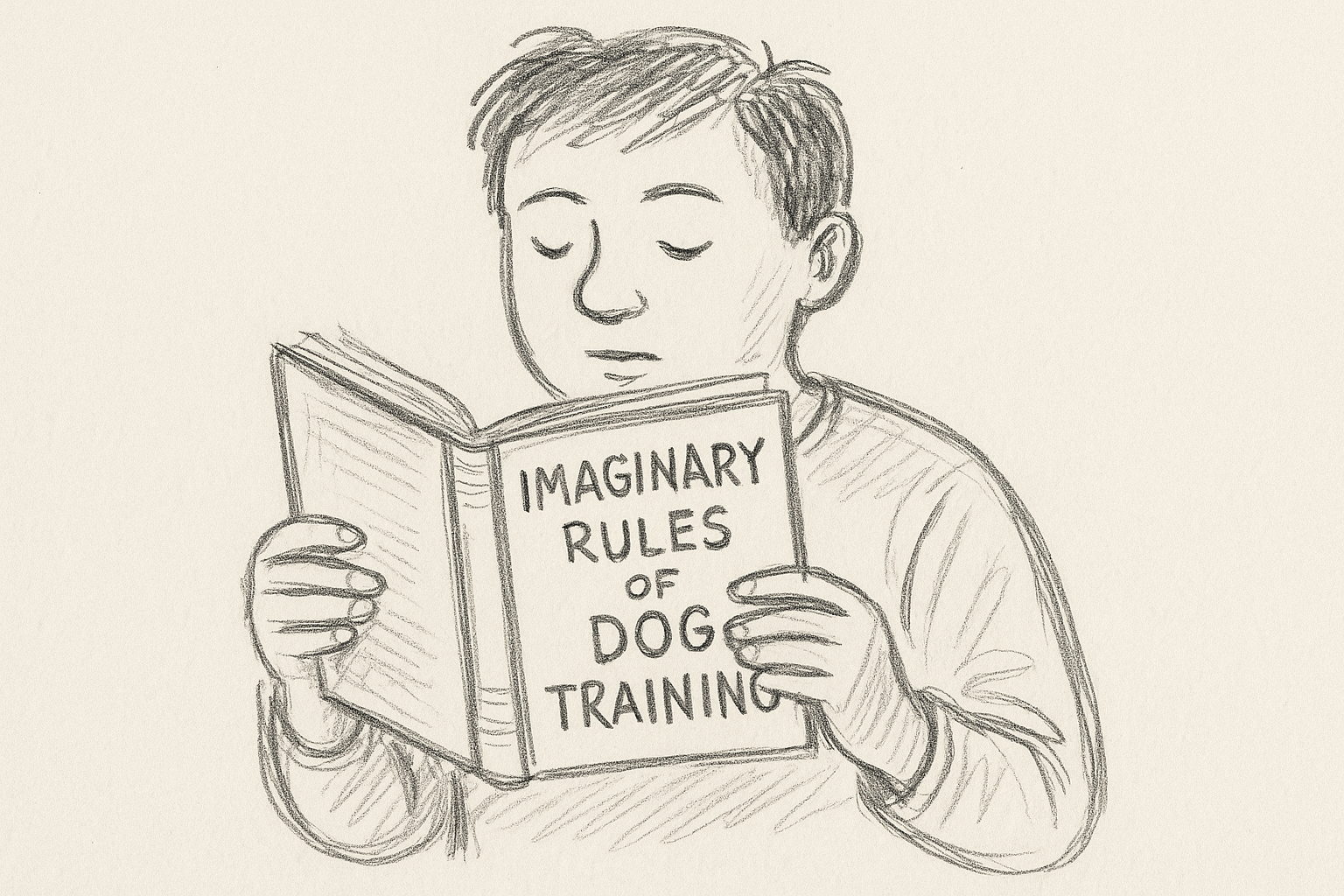
But here’s the question: Who wrote that rulebook?
There’s no law of training that says if you hold a dog strictly accountable for “come,” you must do the same for “sit.” Yet many trainers operate under that very assumption. And this creates unnecessary friction for clients.
A Smarter Standard of Accountability
If we pay closer attention to lifestyle, it becomes clear that some behaviors matter more than others.
- A country client who rarely walks on leash may not need a militant heel.
- A city client who navigates busy sidewalks daily may depend on it.
- For one family, “down” and “place” may be the foundation of peace at home.
- For another, “sit” may be nothing more than a polite formality at the vet’s office.
When trainers insist on uniform accountability across the board, we ask clients to enforce corrections on behaviors they don’t truly value. The result? Hesitation, inconsistency, or avoidance.
Instead, imagine tailoring accountability: a few behaviors are non-negotiable, others are kept more casual.
Why This Works for Clients
It’s far easier to motivate a client to correct consistently when the corrections protect the behaviors that directly shape their quality of life with the dog.
And when you reduce the number of behaviors requiring strict accountability, you also reduce the overall number of corrections. Fewer corrections mean:
- Greater follow-through from clients.
- Stronger performance in the behaviors that matter most.
- Less tension in the trainer–client relationship.
As an example: take those same “big five” commands. If we focus firm accountability on come, down, and place, while keeping leash walking and sit more relaxed, we’ve reduced correction opportunities by 40%. Yet we’ve delivered more consistent results where they count.
The Business Ripple Effect
This isn’t just good for training outcomes, it’s good for business.
When clients feel the program is tailored to them (rather than forced upon them), they leave more satisfied. Happier clients lead to stronger rapport, more referrals, and better word-of-mouth.
And by not over-investing energy in polishing commands that don’t matter to the client’s lifestyle, you free up your own bandwidth. More time, more clients, more growth.
Better results. Happier clients. More referrals. More profit.
Who wouldn’t want that?
-Tyler Muto
Click here to schedule a FREE Discovery Call and learn how my mentorship programs can elevate your training and set you apart from the crowd
Leave a Reply