Mistake #4: The Arousal Blind Spot
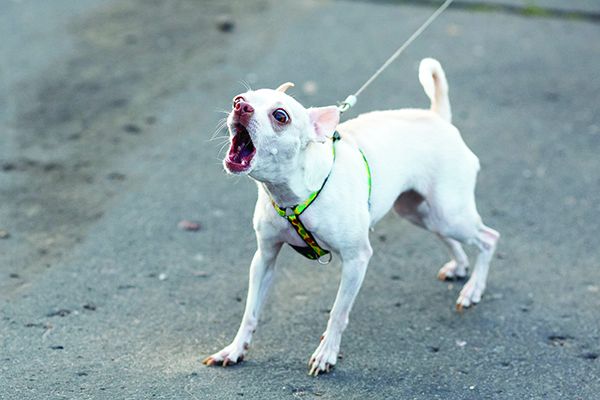
For years, my behavior plans for reactive dogs focused almost entirely on what I could see. The barking, the lunging, the stiffening body. I was watching the dog’s physical behavior and building my interventions around it. For a lot of cases, that was enough. But there was a subset of dogs I kept plateauing with. I’d get partial progress and then hit a wall I couldn’t explain.
One of the many things that changed was the realization that I’d been managing the output of arousal without sufficiently managing arousal itself. Once I started building a real toolbox for that, I was able to revisit dogs I’d plateaued with in the past and make dramatic breakthroughs.
This post is about that blind spot and three of the ways it shows up. These aren’t three versions of the same mistake. They’re distinct problems that all live under the same umbrella, and I think most trainers who work reactive cases will recognize themselves in at least one of them.
Mistake #4a: Not Addressing Arousal At All
This one is straightforward. Some trainers simply don’t factor arousal into the plan.
Sometimes that’s because they haven’t been taught to look for it. They see the reactive display and treat it as the problem to solve, full stop, without asking what’s building underneath it before the display even starts.
Other times, a trainer knows arousal matters. They’d tell you, if you asked, that a dog’s rising intensity plays a role in reactivity. But that knowledge never makes it into the plan. Either they don’t believe it needs a dedicated strategy, or they simply don’t know what that strategy would look like, so the plan defaults back to managing the trigger and the behavior around it.
The fix here doesn’t require a new technique. It requires acknowledgment. Once you start treating arousal as its own variable, something with its own baseline, its own early signs, and its own management strategy, you’ll find yourself building plans that hold up in situations your old plans couldn’t touch.
Mistake #4b: Writing Off Food as an Arousal Tool
The second mistake is more specific, and I think it’s one of the more costly ones because it’s so easy to justify.
A lot of trainers believe that food rewards necessarily raise a dog’s arousal. There’s some logic to the belief. Food can absolutely be delivered in ways that ramp a dog up: fast pacing, high-value treats thrown with excitement, quick successive rewards that build anticipation, rewarding the dog at peak intensity as a means of building motivation and drive. If that’s the only way you’ve seen food used, it’s an easy leap to assume that’s just what food does.
But that’s not the full picture. The same tool that can build excitement can also be used, deliberately, to build and reinforce calm. Timing, pacing, delivery, and criteria all shape the outcome. Food isn’t inherently arousing. How you use it determines what it produces.
This is a topic that deserves its own post, and I’m not going to try to teach the mechanics of it here. What I’ll say is this: if you’ve written off food as part of your arousal management strategy, I’d encourage you to get curious rather than settled. Start researching how experienced trainers use reinforcement to lower a dog’s baseline instead of raising it. It’s one of the more valuable additions you can make to your toolbox, and it’s also one of the subjects that comes up regularly when trainers work with me directly to sharpen their reactivity skill set.
When a trainer wrongly rules out food, one of two things tends to happen. Either arousal management gets dropped from the plan entirely, which puts you back in mistake 4a, or the trainer keeps trying to manage arousal, just without food in the toolbox. That means leaning harder on whatever tools are left. For some trainers, that means leaning on punishment, often labeled as “corrections.”
Which brings us to the third mistake.
Mistake #4c: Punishing Arousal Itself
This is the one I see most often in trainers who are trying to get this right, and it’s the one I think is worth the most time.
Here’s what it looks like in practice. The dog starts to get tense, or a little too locked on, or generally “amped up,” and the trainer instructs the owner to give a correction right then, in response to that rising state. Not in response to a specific action. In response to how the dog seems to be feeling.
I understand why trainers reach for this. Once a dog goes fully over threshold, it’s extremely difficult to interrupt them, even with a strong correction. So the logic makes sense on the surface: catch the arousal before it becomes an explosion, and you never have to deal with a dog who’s already gone. That instinct isn’t wrong. The application is.
The problem is that arousal isn’t a behavior a dog can easily connect to a consequence. It’s a state. Most people struggle to notice in the moment when they’re getting worked up themselves. Asking a dog to make that same connection, that a correction is happening because of how I’m feeling rather than because of something I did, is asking for a level of self-awareness that isn’t reasonable to expect. However, many trainers will initially disagree with me here because they will say that they’ve seen these corrections work.
What actually happens after one of these corrections is usually something else entirely. The dog gets more cautious. Trainers read that caution as success: the dog seems calmer, less reactive, problem solved. But I think what’s really happening is uncertainty. The dog experienced something aversive and doesn’t understand why. Uncertainty produces caution on its own, independent of whether the dog has learned anything about arousal.
And that caution doesn’t hold. If the dog becomes more cautious, they trigger fewer corrections. Fewer corrections mean the uncertainty that was driving the caution starts to fade. And once it fades, you’re right back where you started, a dog with the same underlying arousal problem you began with. It’s a short-lived false positive, not real progress, and trainers who lean on this method often end up repeating the same correction indefinitely because it never solves the problem in a lasting way.
The better target is a decision, not a state. Instead of correcting rising arousal itself, find a specific, observable choice the dog is making, something they’re aware of choosing. The first step toward the trigger. The first shift in weight toward engagement. That’s a moment the dog can connect to a consequence, because it’s an action, not a feeling.
If punishment is part of your plan at all, one more thing is worth knowing: don’t lock yourself into a single type of correction or tool. Different dogs respond very differently to different kinds of aversive experiences. Some tools can be quite aversive without doing anything to lower arousal. Others can bring a dog’s intensity down even at a fairly low level. If you’re going to use punishment as part of an arousal-aware plan, aim for two things: make sure you’re punishing a distinct, recognizable choice, and choose a correction that actually de-escalates the dog rather than one that simply stops the behavior in the moment.
Where This Leaves You
None of these three mistakes require throwing out your existing plan. They require adding a piece that’s often missing: a deliberate, direct strategy for managing arousal, built with a full toolbox instead of an incomplete one. And if corrections or punishment are part of that strategy, they need to be applied to decisions and actions the dog can understand.
That’s mistake number four. If you want help building that toolbox for your own reactivity cases, set up a Free Discovery Call to learn about my coaching process.


Leave a Reply