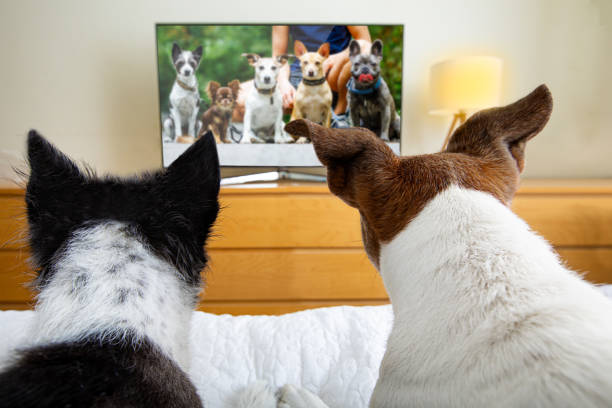
I have seen a few different trainers make some version of a decades-old claim lately: that socialization isn’t what people think it is, that it doesn’t need to be done in dog parks and daycares, and that just taking your dog out into public and letting them observe is socialization too. In many of these framings, it’s the preferred version of it. Sitting on a bench at a busy park, posting up at the edge of a shopping center parking lot, letting the dog watch the world go by – all of that gets called socialization.
I don’t think that’s right, and I want to walk through why.
First, the part I’m not arguing. What these trainers are describing – dogs taking in a busy environment without interacting with anyone in it – is a real and useful thing. It has a name: environmental habituation, or desensitization. Getting a dog comfortable with traffic, crowds, carts, noise, and general chaos is genuinely valuable work, and for a lot of dogs it’s necessary work before anything else can happen. I’m also not saying every trainer should be running structured socialization sessions. If you’re a private-lesson trainer working out of people’s homes, you probably don’t have a rotating group of stable, known dogs to draw on the way a training center does. That’s a real constraint, not an excuse, and it doesn’t make you any less of a trainer to say that structured socialization is outside your scope of work. Plenty of excellent trainers build their whole practice around obedience, manners, or behavior modification and never touch it.
The same goes for owners. Socialization doesn’t have to be on your list of goals. Some dogs don’t need it, some owners don’t want it, and that’s a completely legitimate call to make. None of what follows is an argument that every dog needs structured socialization. It’s an argument that if you’re going to use the word, use it for the thing it actually describes.
Environmental habituation is not the same thing as socialization, and conflating the two has a cost for both trainers and dog owners.
We already know what socializing means
We don’t need a special definition for dogs here, because we already have a working one for ourselves. Nobody would say they socialized at a coffee shop if they sat alone in the corner and watched other people order drinks. Nobody would describe an hour spent on a bench watching traffic go by as “socializing with the cars.” We’d call that people-watching, or just sitting there. Socializing implies interaction. It implies some kind of relationship, however brief, between you and another person.
The same logic holds for kids. If you take a toddler to a playground and they just want to sit next to you on the bench and watch the other kids play, most parents will nudge them: “Go on, go play with them, get out there and socialize.” That instinct is doing a lot of work. It’s a plain acknowledgment that watching from the sidelines isn’t the same as socializing, even though the child is technically present in a social environment.
That’s the same gap I see in the dog training version of this argument. A dog sitting on a bench watching other dogs play in a park is doing something. It’s just not socializing. Neither is a dog parked at the edge of a lot watching cars and foot traffic go by. That’s environmental exposure. There’s nothing social about traffic.
The false choice underneath this
I think I understand where this framing comes from. A lot of trainers making this argument are reacting, reasonably, to a real problem: owners turning their dogs loose in unmanaged environments like dog parks and calling it socialization, then dealing with the fallout when it goes badly. That concern is legitimate. Unsupervised, unstructured socialization with unknown dogs is a real risk, and plenty of dogs have been set back or seriously hurt by it.
But the conclusion doesn’t follow. The options aren’t limited to reckless, unsupervised free-for-alls on one side and passive observation on the other. There’s a third option, and it’s the one that actually deserves the name socialization: structured, supervised interaction between dogs, managed by someone who knows what they’re looking at and is actively guiding it.
Going back to the toddler analogy: As parents, we don’t choose between “leave my kid alone in a room full of strangers” and “never let them near other kids.” We bring our kids into supervised play, stay close, and step in when needed, redirecting a grab, coaching a share, helping two kids work out who gets the toy next. That supervision and guidance is what makes it structured instead of chaotic. It’s still real interaction, it’s just managed, and it’s an irreplaceable learning opportunity.
Structured dog socialization works the same way. It’s not a dog park free-for-all, and it’s not a dog on a leash watching from ten feet away either. It’s controlled interactions with dogs whose temperament and history you know, active management of the interaction, and a person paying attention closely enough to step in before things go sideways instead of after.
What you only get from the real thing
This part matters most to me, and it is the part that gets lost entirely when habituation stands in for socialization. When I evaluate a dog’s social skills, two of the things I’m looking for above almost everything else are:
- Can this dog tell another dog “no” without taking it too far?
- Can this dog be told “no” by another dog without retaliating?
Those are relationship skills. They only get built through actual interaction, ideally the kind where a person is close enough to guide it and step in if a correction starts to escalate past what it needs to be. A dog sitting on a bench watching the park never has to navigate a moment of conflict, never has to read another dog’s boundary and back off, never has to set a boundary of its own and hold it appropriately. That dog might come away from the outing more comfortable with noise and movement and unfamiliar dogs and people at a distance. It won’t come away better at actually engaging with other dogs, because it was never involved in any real social interaction.
That’s the piece environmental habituation simply cannot do, no matter how many hours of exposure a dog gets. This is not a knock on habituation. It’s just not what habituation is for.
Why the words matter
I get why it’s tempting to fold both concepts under one term. It’s simpler, and it sidesteps the harder conversation about how to teach structured socialization responsibly. But when we call habituation socialization, we’re not just being loose with language. We’re quietly acting as if structured socialization, and the specific things it builds, don’t really exist as their own category of skill. That’s a bigger loss than a vocabulary slip. It shapes how trainers think about what a dog needs, and it shapes what owners come to expect and ask for.
Using the right term for each keeps that distinction alive. It also just makes us look more professional to the clients who are paying attention to how carefully we use language around their dog’s development, and it heads off a fair amount of confusion down the line when an owner assumes their dog is socialized because it has spent a lot of time sitting quietly near other dogs.
Environmental habituation is worth doing. Socialization is worth doing. They’re not the same thing, they don’t produce the same dog, and it’s worth calling each one by its rightful name.
If this is a skill set you want to build in a dog you’re working with, structured socialization for reactive or difficult dogs is exactly what my online course Socialization for Difficult Dogs walks through. And if you’re a trainer trying to figure out how to offer this with or without a training center’s worth of dogs on hand, that is one of the many things we can work through in 1:1 coaching.
* Reader’s note: The examples here focus on dog-to-dog interactions, but the same principles apply just as much to dog-to-person interactions.
Postscript: There are certain things in this article that I got wrong. I wrote a follow-up, which you can find here.
Leave a Reply