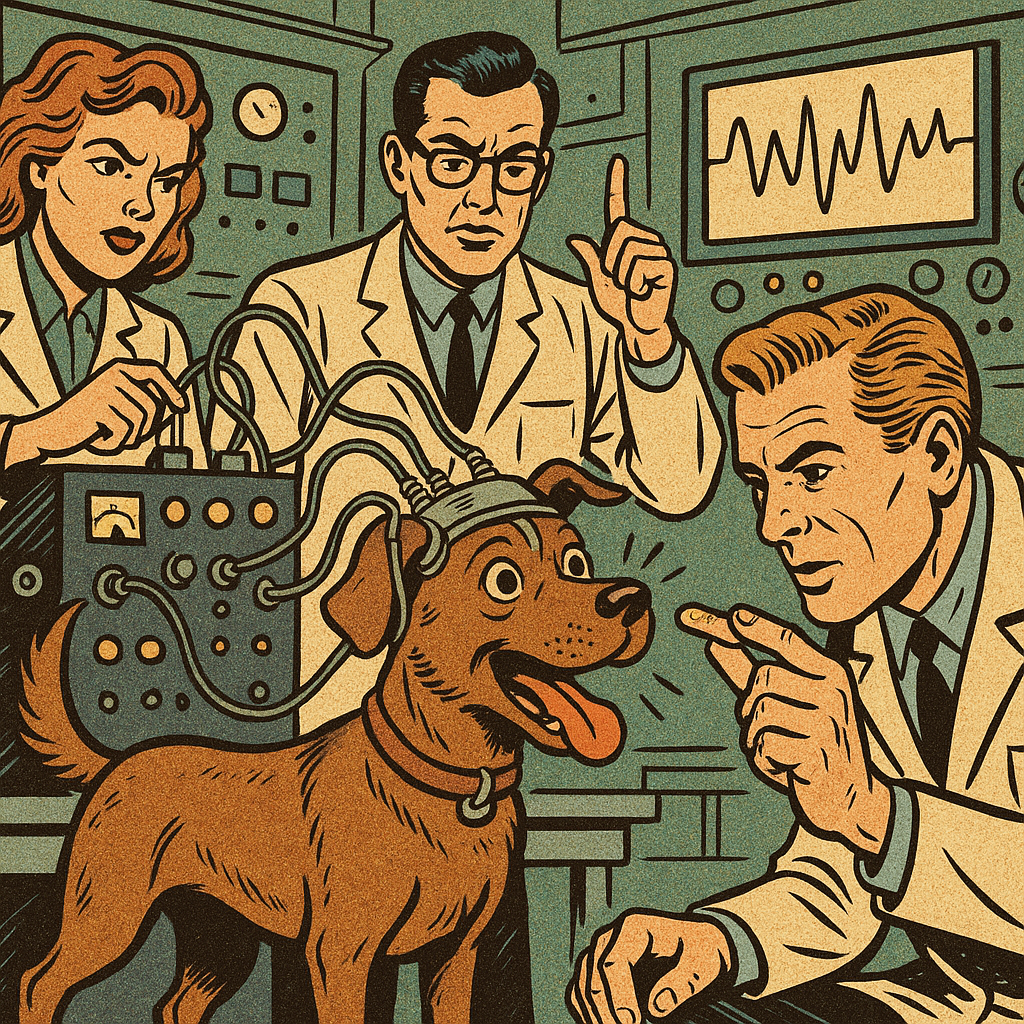
In dog training, we often speak in terms of reinforcements and punishments—the carrots and sticks that shape behavior. It sounds wonderfully scientific: press a button and get an expected outcome. Unfortunately, dogs aren’t levers on a Skinner box. They are social beings living inside of social systems, and those systems—family, household, relationship—fundamentally change what rewards and punishments mean.
Think of it this way: a compliment from a stranger on the street might feel nice. The same words, spoken by your closest friend, carry far more weight. And if spoken by someone who has betrayed you, those same words might sting. The phrase didn’t change. The relationship did.
Rewards and Punishments Are Never Neutral
Every piece of feedback we deliver to a dog is filtered through the relationship we have with them. A food treat given by someone the dog trusts feels like generosity; the same treat, given by someone who often intimidates the dog, may feel like manipulation. A timeout from play might feel like a gentle boundary when coming from a beloved guardian, or like cold rejection when the social fabric is already frayed.
This is why any discussion of “what works” in dog training cannot be reduced to tallying up reinforcements and punishments as if they exist in a vacuum. They exist inside relationships, and the health of those relationships determines their effect.
Why Behavioral Cases Live or Die on Relationship
Nowhere is this more obvious than in behavioral cases—dogs with aggression, anxiety, or complex histories. You can apply every technique in the textbook, but if the underlying relationship between dog and human is out of balance—if trust is low, communication is poor, or resentment has crept in—progress stalls.
On the flip side, when the relationship is nurtured—when the dog feels safe, when the human is both empowered and viewed as a trusted leader who offers clear guidance and protection, and when both trust the process—even modest technical interventions can produce remarkable change. Relationship is not the backdrop to training. It is the soil in which training grows.
The Flaw in “Scientific” Studies That Ignore Relationship
This brings us to a cautionary note: science is only as good as the variables it measures. Too often, studies on the effects of punishment (or reward, for that matter) on pet dogs are conducted as if the relationship context doesn’t exist. They measure frequency of behavior change without asking: Who delivered the consequence? What was the history of that relationship? Did the dog view the human as a trusted leader or as an unpredictable source of stress?
Imagine trying to study the effects of discipline in children without considering whether the parent is warm, consistent, and protective—or cold, chaotic, and frightening (or even if the discipline were doled out by a complete stranger). The results would be hopelessly incomplete. Yet this is precisely the blind spot in much of the pet training research.
The Takeaway
As trainers, guardians, and advocates, we cannot afford to treat rewards and punishments as sterile inputs. They are inherently social acts, woven into the larger tapestry of the dog-human bond. To ignore that context is to miss the forest for the trees.
So the next time you evaluate a case, or even your own training choices, don’t just ask: What consequence am I applying? Ask instead: What does this consequence mean inside the relationship I’ve built with this dog? Does my dog see me as both safe haven and trusted leader?
Because in the end, it’s not the treat, the toy, or the correction that matters most. It’s the relationship that gives it meaning.
Do you feel like there is a missing link in your training?
Click here to set up a free discovery call and learn how Tyler has helped hundreds of trainers breathe new life into their work and set themselves apart from the crowd.
Leave a Reply